


In a high-end interior project, furniture is rarely chosen from a catalog and left unchanged. Dimensions, upholstery, finishes, comfort, construction and delivery details all need to work with a specific space. Choosing the right custom furniture manufacturer is therefore less about finding the longest product list and more about finding a partner that can turn design intent into an approved, repeatable specification.
For interior designers, project contractors and furniture retailers, the safest decision is an evidence-based one. Review how each supplier develops drawings, confirms materials, produces samples, controls quality and manages changes before comparing the final quotation.
Quick answer: A suitable manufacturer should offer technical communication, 3D visualization or production drawings, material and sample confirmation, relevant manufacturing capabilities, documented quality checks and a realistic delivery plan.
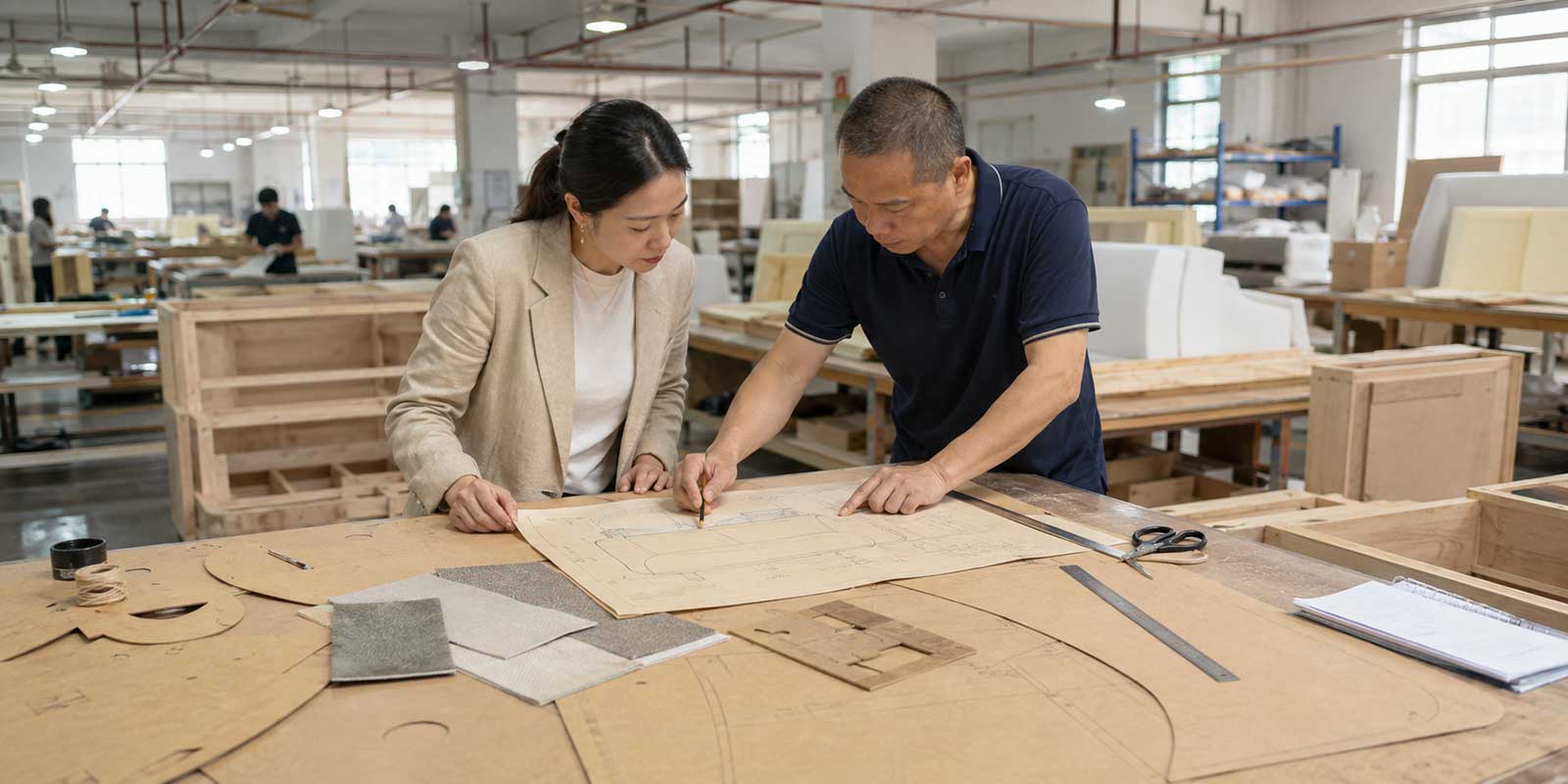
An accurate quotation begins with accurate information. Send the same brief to every shortlisted supplier so their technical responses can be compared on equal terms. The brief should normally include:
Floor plans, elevations or furniture layouts
A furniture schedule, quantities and required dimensions
Reference images and the intended design direction
Preferred upholstery, veneer, stone, metal and hardware finishes
Functional, structural or installation requirements
Project location, approval dates and expected delivery schedule
Packaging, labeling and target budget information, when available
A responsible supplier will identify missing information instead of quoting a complex item from one reference image. That first response often reveals how carefully the team will communicate once production begins.
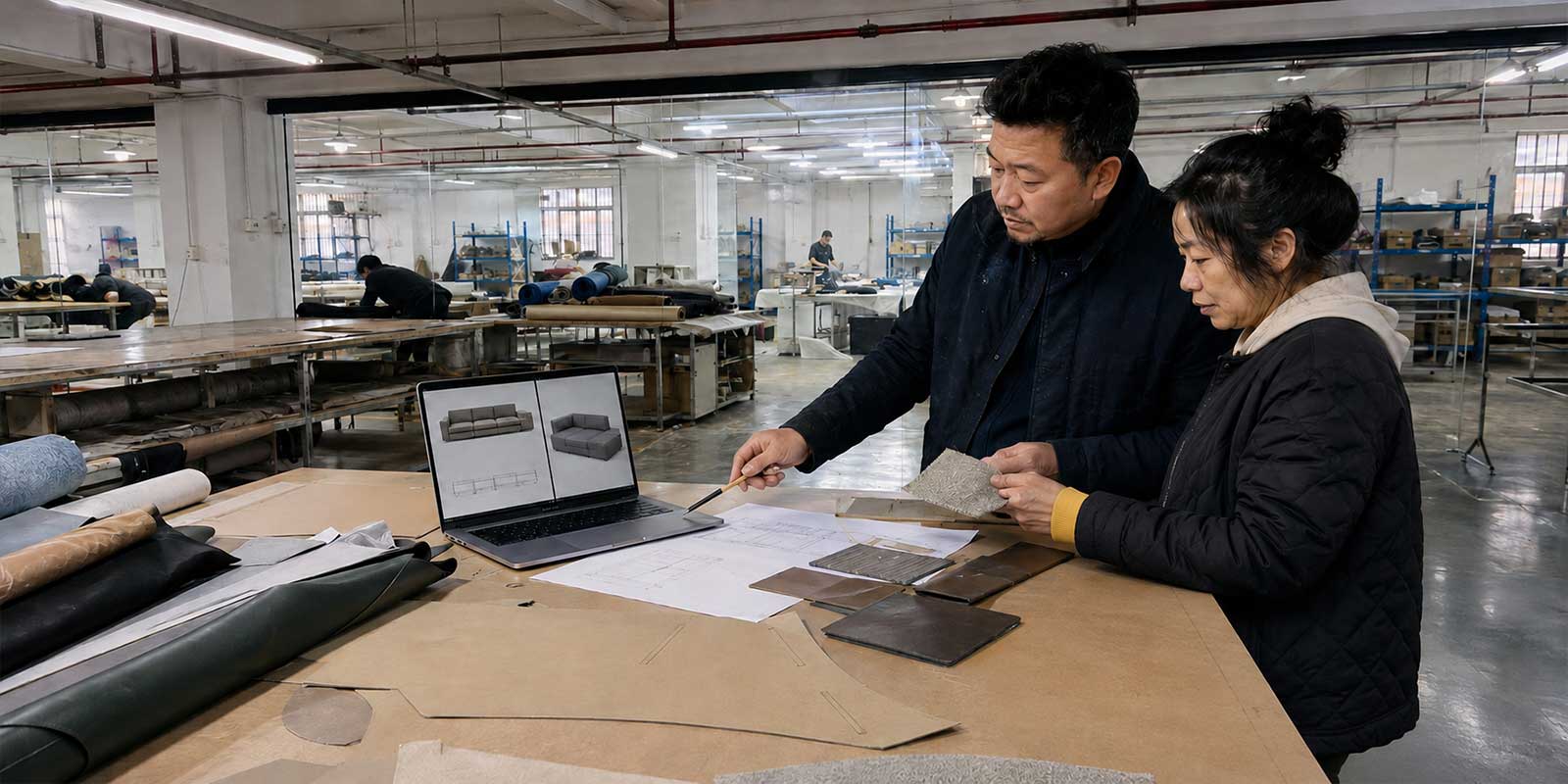
A capable custom furniture manufacturer should be able to convert a creative concept into buildable specifications. Ask how the team confirms dimensions, proportions, modular layouts, internal construction and material transitions. Where required, 3D visualization can clarify form and scale, while production drawings establish the details used on the factory floor.
Drawings are only one part of approval. Leather texture, fabric hand feel, veneer variation, stone pattern, foam comfort and metal color still need physical confirmation. A well-organized approval package links every sample and finish code to the correct furniture item.
| Evaluation Area | What the Buyer Should Confirm |
|---|---|
| Design development | Feasibility review, dimensions, drawings and revision records |
| Materials | Codes, grades, colors, finishes and expected natural variation |
| Sample approval | Prototype scope, approval method and bulk-production reference |
| Commercial scope | Included services, exclusions, lead time, packing and responsibilities |
Look beyond factory size
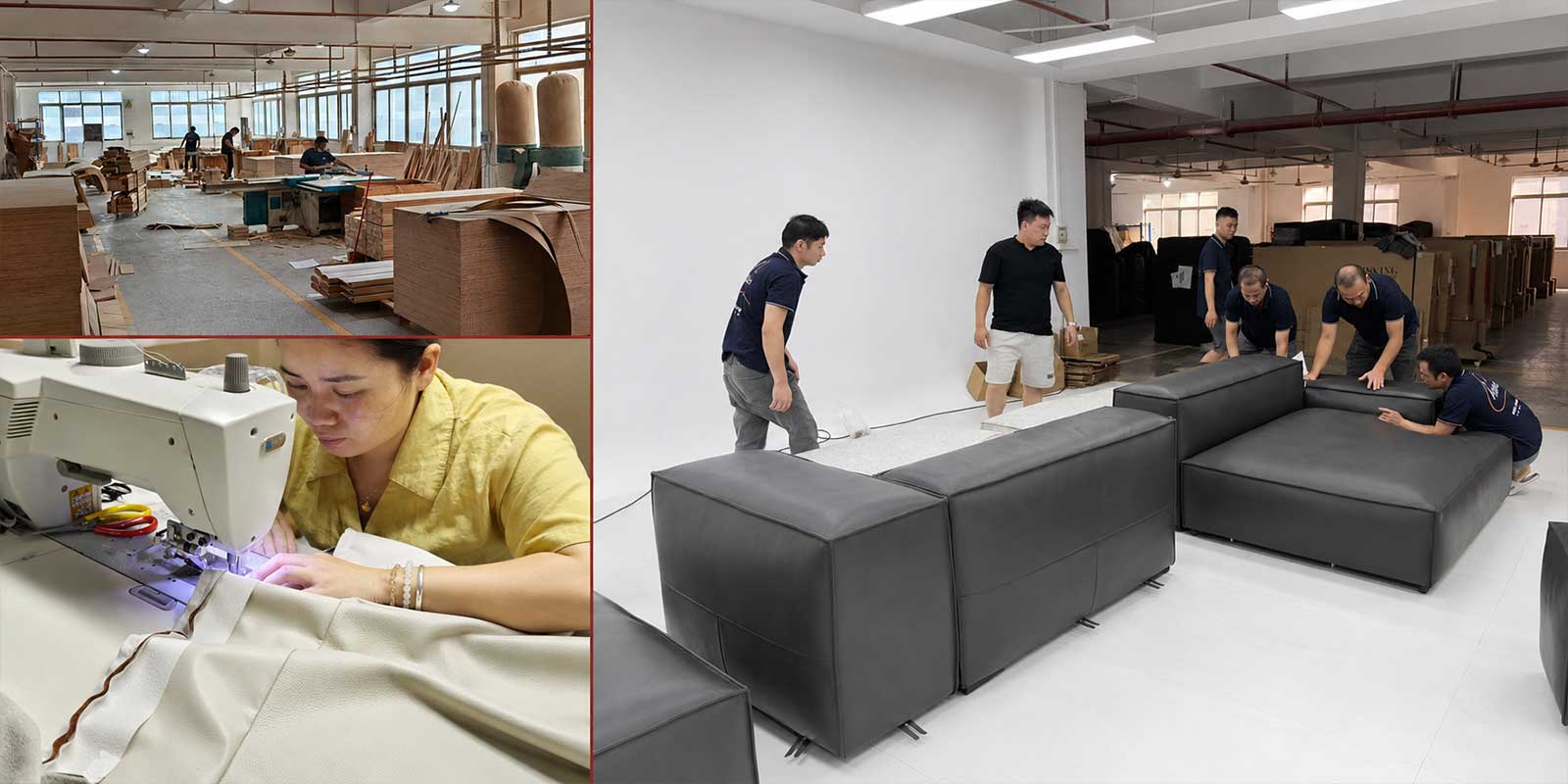
Factory area can suggest capacity, but it does not prove that a supplier can make your products well. When comparing high end furniture manufacturers, ask which categories and processes are handled in-house, which components are outsourced and who inspects incoming parts. An integrated operation can reduce handoffs and make revisions, material tracking and scheduling easier to coordinate.
You can review RSKING’s Manufacturing Strength to see how its production environment supports design development, custom manufacturing, inspection and project coordination.
High-end furniture still depends on experienced hands, especially for curved upholstery, sewing, veneer matching, polishing, mixed-material junctions and final adjustment. Yet good craftsmanship should not mean that every piece is interpreted differently. The approved sample, drawings and material codes must become the shared reference for the complete order.
Ask how the factory maintains consistency between the prototype and bulk production, different batches, repeated room types and future replacement orders. For retailers, repeat-order stability is as important as the appearance of the first sample.
“Strict quality control” is meaningful only when the supplier can explain what is checked and when. Depending on the product, inspection may include incoming materials, dimensions, internal structure, upholstery, stitching, surface finishes, assembly, stability, final appearance and export packing.
The criteria should follow the risks of the actual product. A sofa, dining chair, upholstered bed, sideboard and stone-top table do not need identical checkpoints. Inspection forms, photographs, approved samples and tolerance records give designers and contractors a clearer view of progress.
Compare total project risk, not unit price alone
A lower quotation may exclude drawings, prototypes, special finishes, upgraded hardware, protective packing or additional inspections. Before deciding, confirm that each quotation uses the same models, dimensions, quantities, materials, development scope, sample method, lead time and commercial terms. If two prices differ sharply, locate the specification or service difference first.
Searches for the best furniture manufacturers, top furniture manufacturersor luxury furniture manufacturers can help build a shortlist, but strong branding and showroom photography do not prove project-delivery capability. The best furniture manufactureris the verified match for your product categories, approval process, quantity, schedule and quality expectations.
| Criterion | Suggested Weight |
|---|---|
| Design interpretation and technical support | 20% |
| Materials and sample confirmation | 20% |
| Manufacturing ownership and craftsmanship | 20% |
| Quality control and repeatability | 20% |
| Schedule, communication and delivery support | 20% |
Complex furniture is quoted without questions or specifications
Materials are described only as “premium” or “high quality”
The supplier cannot explain which processes are handled in-house
Revisions and approvals are not documented
Sample confirmation is avoided or rushed
A firm lead time is promised before the scope is reviewed
Inspection, packing or delivery responsibilities remain unclear
Submit the brief, drawings and furniture schedule.
Confirm item scope, quantities and preliminary feasibility.
Develop and approve drawings or 3D visualizations where required.
Approve material samples, colors, finishes and hardware.
Review the prototype or pre-production sample.
Lock the final specification before bulk production.
Complete in-process and final inspections.
Confirm export packing, labeling and delivery arrangements.
RSKING supports this process through a 26,000 m² integrated manufacturing base, 40+ experienced artisans, 20+ quality control checkpoints, 3D visualization and sample confirmation. These facts are useful starting points, but every project should still be assessed against its own furniture schedule, materials, quantities and delivery requirements.
To review the stages from initial requirements to drawings, samples and production, see How to Work with Us.
Send layouts or floor plans, item quantities, dimensions, reference images, preferred materials, finish requirements, project location and target delivery date. A furniture schedule or bill of quantities will improve quotation accuracy.
No. Capacity is useful, but relevant workshops, skilled personnel, process ownership, sample accuracy, quality control and communication matter just as much.
A sample lets the buyer check dimensions, comfort, construction, materials, colors and finish quality. Once approved, it also becomes a physical reference for bulk-production inspection.
Custom furniture manufacturers build around project-specific requirements. Luxury suppliers may emphasize premium design, materials and positioning. Some companies provide both, but buyers should verify real customization and delivery capabilities instead of relying on labels.
Choosing a custom furniture manufacturer should come down to evidence: clear technical responses, approved materials and samples, relevant production control, documented inspections and dependable communication. If you are preparing a high-end interior project, share your furniture schedule, drawings, references and timeline with RSKING for an initial feasibility review.
Sign up to stay up to date:
Write your email here..
FOLLOW US
On RSKING's social channels


Address : Warehouse B, 3rd Floor, Building 1, No. 2 Lianxin South Road, Sanlian Industrial Park, Wanggang Village, Longjiang Town, Shunde District, Foshan City, Guangdong Province
Service Hotline : +86 757 2336 9686
Contact phone : +86 186 6654 8299
Email : sales@rskingfurniture.com
Copyright © RSKING All Rights Reserved


